News and insights on animal health management for working and farm animals

Month: April 2026

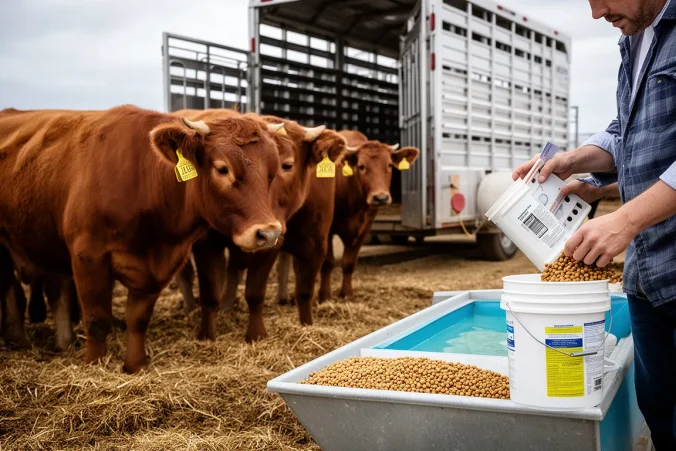
Nutritional Strategies to Boost Immunity in Transported Livestock

Nutritional Strategies to Boost Immunity in Transported Livestock

You can raise resistance to stress and illness by changing what and when animals eat in the days right before a haul. The steps below work for cattle, sheep, and goats on trips that last six hours or more.

Start Feed Changes Three Days Out

Begin adjustments early so rumen bugs have time to adapt. Skip last-minute big shifts that can drop intake.

  • Raise vitamin E to 400 to 600 IU per head daily for cattle.
  • Add 0.3 percent zinc from an organic source in the total mixed ration.
  • Keep forage quality steady and avoid sudden grain increases that cause loose manure.

Key Nutrients and Daily Targets

These four items give the clearest payoff during transport stress.

Nutrient Target per head Example for 500 kg steer
Vitamin E 500 IU Top-dress 5 g of 50 percent E premix
Zinc 30 to 40 mg/kg DM Include chelated zinc in mineral pack
Vitamin A 50,000 IU Use in the same premix
Selenium 0.3 mg/kg DM Blend with salt at 90 ppm

Load-Day Electrolyte Checklist

  1. Weigh or estimate total body weight of the group.
  2. Mix electrolyte powder at 2 g per kg body weight into 10 liters of water per animal.
  3. Offer the mix 45 minutes before loading; most cattle drink 4 to 6 liters.
  4. Skip if animals already have free-choice water and salt.

Handle Transit with Simple Additions

Once animals are on the truck, water access and small feed top-ups matter most. On trips over eight hours, stop every four to six hours and let them drink. Add a probiotic paste at the first stop for groups that look tight in the gut. One 10 g dose per head of a multi-strain product is enough for most 400 kg animals.

Recovery After Unloading

Give animals access to long-stem hay within 30 minutes of arrival. Hold off on heavy grain for the first 12 hours so they can rehydrate. Check manure consistency the next morning; if it is still firm after 24 hours, add another round of electrolytes in the water tank.
Joint Health in Equestrian Athletes: From Diagnosis to Long-Term Care

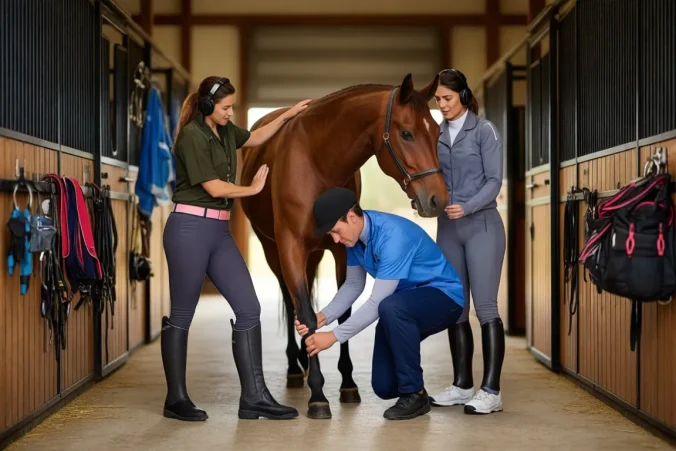
Joint Health in Equestrian Athletes: From Diagnosis to Long-Term Care

Track the exact moments your knees or hips complain during a ride. That record becomes your starting point for every decision that follows.

Recognizing Early Warning Signs

You know the feeling after a long jump school when one knee swells by evening. Riders often notice the same pattern after sitting deep in the saddle for collection work.

  • Stiffness that lasts more than twenty minutes after dismounting
  • Sharp pain on the inside of the knee when posting at the trot
  • Hip clicking that appears only after a full day of lessons
  • Lower back ache that wakes you at night after a fall two weeks earlier

Getting an Accurate Diagnosis

Start with your regular physician and ask for a referral to a sports-medicine doctor who sees riders. Bring your ride log and photos of any swelling.

  1. Describe the exact movement that triggers pain, not just general soreness
  2. Request weight-bearing X-rays plus an ultrasound if fluid is present
  3. Schedule an MRI only after the first two steps if symptoms persist past ten days
  4. Ask whether the joint issue ties to your stirrup length or saddle fit

Handling the First Month of Recovery

Most riders need two to four weeks of modified activity rather than total rest. Keep your horse in work with a student or groom so you stay mentally sharp.

Week Activity Level Example
1-2 Groundwork only Hand walking and light lunging from the center
3 Short mounted sessions 15 minutes walk-trot on a quiet horse
4 Build back gradually Add canter only if no swelling appears the next morning
  • Ice the joint for ten minutes after every ride or barn chore
  • Switch to a mounting block on the opposite side to reduce torque
  • Check saddle panels for even pressure before each session

Daily Habits That Protect Joints

Small changes compound. Riders who stretch their hip flexors for five minutes before tacking up report less morning stiffness within three weeks.

  • Do single-leg balance drills on a folded towel while brushing your horse
  • Keep a foam roller by the tack room door and use it on the quads after every ride
  • Choose half chaps with extra knee padding if you school over fences daily
  • Swap one high-impact jump day per week for flatwork with transitions

Sustaining Mobility Over the Years

Plan check-ins every six months with the same sports-medicine doctor. Riders who do this catch early cartilage wear before it limits their ability to post.

Keep a simple notebook in your tack trunk. Note any new ache, how long it lasted, and what you changed in the saddle or stirrups. Patterns show up faster than memory allows.

Reassess your saddle fit whenever you add or lose five pounds. Even small shifts change how your pelvis loads the hip joints during sitting trot.