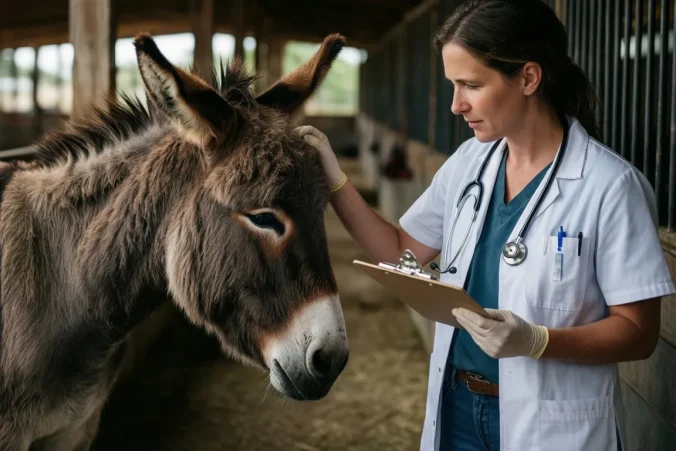
Understanding Pain Recognition in Donkeys and Mules
You notice pain in donkeys and mules through quiet changes rather than loud complaints. These animals often mask discomfort, so you catch it by tracking their normal patterns each day.
Why Their Pain Looks Different
Donkeys and mules evolved to stay still when they hurt. A horse might limp or call out, but these animals just stop moving much or turn their head away from feed.
Watch what happens at feeding time. A mule that normally cleans its bucket might take a few bites then walk off. That small drop in appetite often appears before any posture change.
Signs That Show Up in Real Situations
- A donkey stands with its weight shifted back but still eats hay when you offer it by hand.
- The mule that usually follows you to the gate now waits for you to come to it.
- Ears stay pinned back during grooming even though nothing touches a sore spot.
- Manure piles look smaller or drier than the day before.
Check these points at the same time each morning. One changed item on its own rarely means much, but two or three together point to discomfort.
Daily Field Checks
- Walk past the animal first and note whether it turns its head toward you.
- Offer a handful of feed and count how many bites it takes before it stops.
- Run your hand along the back and watch for any flinch or ear movement.
- Look at the feet and legs while the animal stands square; note any resting of a limb.
| Check | Normal | Possible Pain |
|---|---|---|
| Greeting | Steps forward | Stays put |
| Appetite | Finishes portion | Leaves half |
| Posture | Even weight | One hip dropped |
Leave a Reply