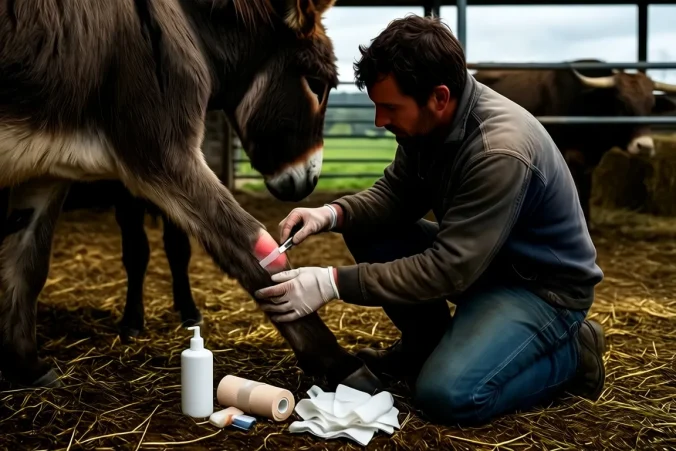
Emergency First Aid for Working Animals: A Step-by-Step Guide for Farmers
When a working dog or horse goes down in the field, you need clear steps you can follow right away. Most farm injuries happen during routine tasks, so we focus on what actually shows up.
Keep a Kit That Matches Your Animals
Store supplies where you can reach them in under two minutes. A basic kit for horses, cattle, and farm dogs covers the injuries we see most.
- Pressure bandages and rolls of gauze for bleeding wounds
- Antiseptic solution and saline for flushing cuts from barbed wire or nails
- Digital thermometer and stethoscope to check vital signs before the vet arrives
- Splint material and duct tape for temporary limb support on a limping horse
- Phone numbers for your regular vet and the nearest emergency clinic taped inside the lid
Work Through the First Five Minutes
Secure the scene so you do not get hurt too. Then check the animal in this order.
- Move other animals away and tie or pen the injured one if it can stand.
- Look for bleeding that will not stop on its own. Press firmly with clean gauze for at least three minutes before checking again.
- Feel for a pulse at the jaw or inner thigh and count breaths for fifteen seconds, then multiply by four. Normal rates for adult horses sit around eight to twelve breaths; dogs run higher, near fifteen to thirty.
- Flush any open wound with saline or clean water and cover it to keep dirt out until you can do more.
A common case is a cattle dog that catches a hind leg in a gate. Once the leg is freed, we stop bleeding first, then check whether the dog can put weight on the foot before deciding on transport.
Decide on Next Actions
| Sign you notice | What to do next |
|---|---|
| Heavy bleeding that restarts after pressure | Keep pressure on and load the animal for the clinic |
| Labored breathing or gums that stay pale when pressed | Call the vet immediately while you keep the animal quiet and warm |
| Swollen limb after a kick or fall, but animal still eats and drinks | Apply cold packs, limit movement, and schedule a farm visit for the next morning |
Once the immediate issue is under control, load the animal only if it can travel without more damage. Many times we stabilize on site and let the vet come to us.
Leave a Reply