News and insights on animal health management for working and farm animals

Tag: pain management

Emergency First Aid for Working Animals: A Step-by-Step Guide for Farmers

Emergency First Aid for Working Animals: A Step-by-Step Guide for Farmers

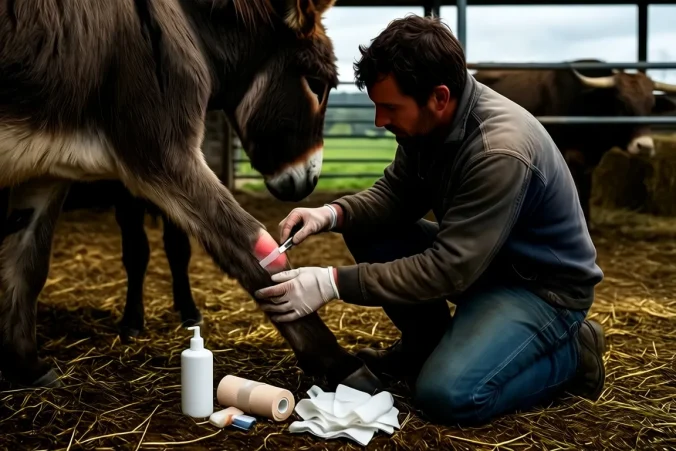
When a working dog or horse goes down in the field, you need clear steps you can follow right away. Most farm injuries happen during routine tasks, so we focus on what actually shows up.

Keep a Kit That Matches Your Animals

Store supplies where you can reach them in under two minutes. A basic kit for horses, cattle, and farm dogs covers the injuries we see most.

  • Pressure bandages and rolls of gauze for bleeding wounds
  • Antiseptic solution and saline for flushing cuts from barbed wire or nails
  • Digital thermometer and stethoscope to check vital signs before the vet arrives
  • Splint material and duct tape for temporary limb support on a limping horse
  • Phone numbers for your regular vet and the nearest emergency clinic taped inside the lid

Work Through the First Five Minutes

Secure the scene so you do not get hurt too. Then check the animal in this order.

  1. Move other animals away and tie or pen the injured one if it can stand.
  2. Look for bleeding that will not stop on its own. Press firmly with clean gauze for at least three minutes before checking again.
  3. Feel for a pulse at the jaw or inner thigh and count breaths for fifteen seconds, then multiply by four. Normal rates for adult horses sit around eight to twelve breaths; dogs run higher, near fifteen to thirty.
  4. Flush any open wound with saline or clean water and cover it to keep dirt out until you can do more.

A common case is a cattle dog that catches a hind leg in a gate. Once the leg is freed, we stop bleeding first, then check whether the dog can put weight on the foot before deciding on transport.

Decide on Next Actions

Sign you notice What to do next
Heavy bleeding that restarts after pressure Keep pressure on and load the animal for the clinic
Labored breathing or gums that stay pale when pressed Call the vet immediately while you keep the animal quiet and warm
Swollen limb after a kick or fall, but animal still eats and drinks Apply cold packs, limit movement, and schedule a farm visit for the next morning

Once the immediate issue is under control, load the animal only if it can travel without more damage. Many times we stabilize on site and let the vet come to us.
Managing Heat Stress in Working Horses: Cooling Strategies and Hydration

Managing Heat Stress in Working Horses: Cooling Strategies and Hydration

When temperatures climb above 80 degrees and your horse has been hauling gear or covering miles, heat stress can set in within thirty minutes. I start by offering water and checking breathing before the horse even stops moving.

Watch for the First Signs

You notice changes in gait and breathing before the horse shows obvious distress. Check these markers after every heavy session.

  • Respiration stays over 60 breaths per minute five minutes after work ends
  • Flared nostrils and skin that stays tented for more than two seconds
  • Stumbling or reluctance to move forward on familiar ground
  • Body temperature above 102.5 degrees taken under the tail

Keep Water Moving

Horses lose 5 to 10 gallons on a warm two-hour ride. Place buckets at every rest point rather than relying on one big drink at the barn.

  • Offer plain water first, then add electrolytes only if the horse has sweated heavily for more than an hour
  • Use a 5-gallon bucket with a handful of loose salt stirred in when daytime highs exceed 85 degrees
  • Check intake by measuring what remains after thirty minutes; a drop below three gallons signals trouble

Cool in Stages

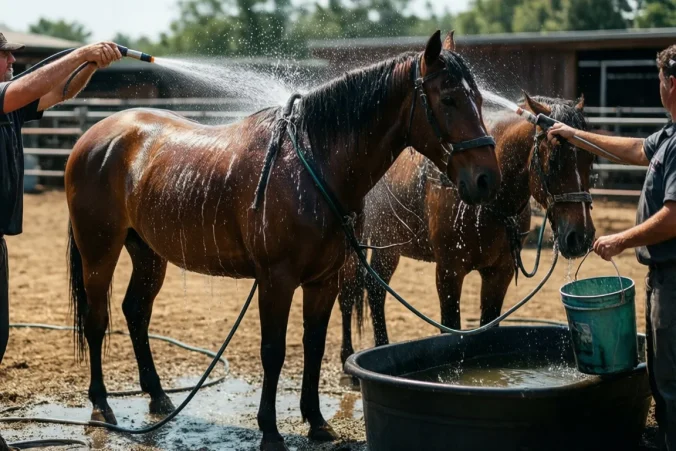
Start with the legs and work upward. Never hose the whole horse at once when the air is humid.

  1. Walk the horse in shade for two to three minutes
  2. Run cool water over the legs and lower belly only
  3. Scrape off water immediately so it does not trap heat
  4. Repeat the cycle two more times, then check temperature again
  5. Move into a breezy barn or under fans once the reading drops below 101.5

Match Electrolytes to the Day

Work Level Example Situation Electrolyte Plan
Light 45-minute trail ride at 75 degrees Plain water only
Moderate Two-hour lesson with jumping at 82 degrees One dose in water after cool-down
Heavy Three hours of field work above 88 degrees Two doses spaced two hours apart

Build Recovery Into the Schedule

After a hot morning session I give the horse at least four hours before any further work. Keep a simple log on your phone: time finished, water taken, temperature at thirty minutes. Patterns show up fast and let you adjust the next day’s plan before problems repeat.