Lameness Prevention in Dairy Cattle: Practical Hoof Care Protocols
Focus on hooves every day and you catch most problems before they turn into lameness cases. The routine below comes from what actually works in freestall and tie-stall herds.
Daily Walk-Through Checks
Walk the herd once after milking while cows are standing. You spot changes faster this way than during rest.
- Look for cows that shift weight or stand with one hoof lifted.
- Check for swelling above the hoof or dark lines in the sole when cows step onto concrete.
- Note any fresh blood or manure packed between the claws.
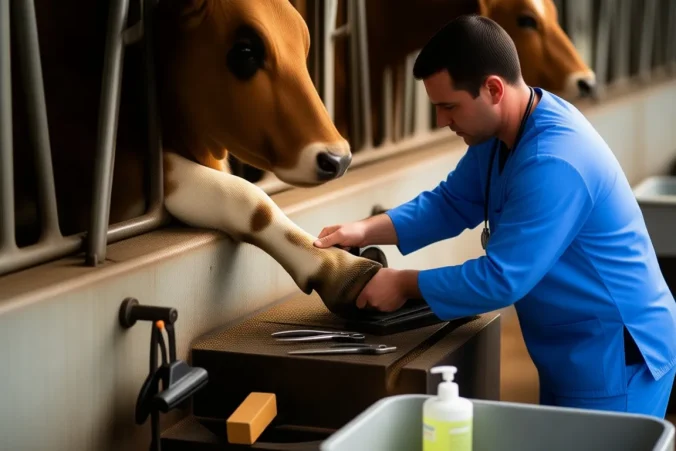
Pull those cows the same day for a closer look on the tilt table. One missed case spreads fast in the group.
Hoof Trimming Schedule and Steps
Most herds need every cow trimmed twice a year. Mark the calendar for spring and fall and add extra checks for high producers.
- Start with the outer claw. Trim it level so it bears weight evenly.
- Remove only the excess horn on the inner claw. Leave enough sole thickness.
- Shape the heel so the cow stands flat on both claws.
- Check the interdigital space and clear any loose skin or dirt before releasing the cow.
Cows trimmed this way usually stay sound through the next lactation cycle.
Footbath Setup and Use
A working footbath sits right after the parlor exit so every cow steps through. Change the solution after 150 to 200 cow passes.
| Solution | Mix rate | Best used |
|---|---|---|
| Copper sulfate | 5% in water | Twice weekly in wet seasons |
| Formalin | 3-5% | When digital dermatitis pressure is high |
| Zinc sulfate | 10% | Alternate weeks with copper |
Keep the bath depth at 10 cm so the solution reaches the coronary band. Skip the bath on cows with open wounds until they heal.
Housing Adjustments That Protect Hooves
Concrete wears horn faster than pasture. Add rubber mats in the holding area and parlor exit lanes first. Those spots see the most traffic.
Bedding depth matters more than type. Aim for at least 15 cm of dry sawdust or sand so cows can stand without shifting weight to the toes. Scrape alleys twice daily so manure does not stay packed against the heels.
If you see more lameness on one side of the barn, check the floor slope and fix drainage before the next trim cycle.