News and insights on animal health management for working and farm animals

Tag: parasite control

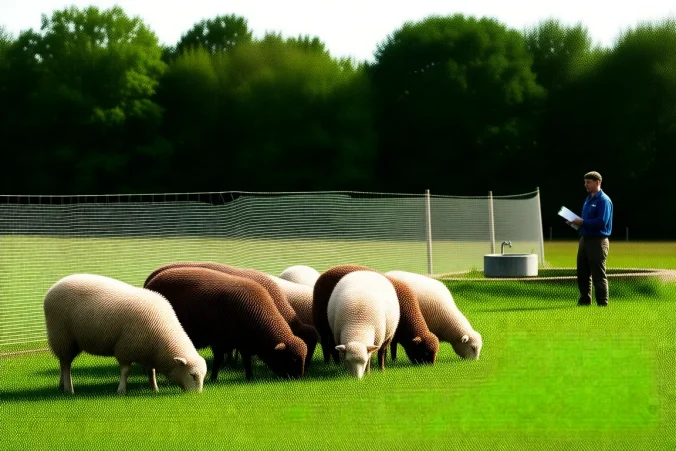
Preventing Parasite Resistance in Grazing Sheep: Integrated Management Plans

Preventing Parasite Resistance in Grazing Sheep: Integrated Management Plans

Start with fecal egg counts every four to six weeks on your ewes and lambs. That single habit keeps you from treating the whole flock on a calendar and slows resistance on your farm.

You already know the main worm threats in your area. The goal now is to cut unnecessary treatments while still catching the animals that need them.

Build your plan around these steps

  1. Sample ten to fifteen animals from each group. Use a pooled count first. If it stays under 200 eggs per gram, skip treatment.
  2. Treat only the animals that show signs or high counts. Leave the rest to dilute the worm population on pasture.
  3. Move treated sheep to clean pasture or graze them behind cattle. Cattle break the sheep worm cycle.
  4. Record every treatment with date, product, dose, and which animals got it. Review the log at the end of the season.

In early summer, one producer I know checks lambs at six weeks old. Only the ones with rough coats or loose manure get dosed. The rest stay untreated until the next check.

Season Check timing Action threshold
Spring 4 weeks after turnout 300 epg or visible signs
Summer Every 5 weeks 250 epg
Fall Before housing Any count over 200 epg
  • Rotate paddocks so sheep return to the same ground only after 45 days or more.
  • Run a few cattle or goats with the flock when pasture growth slows.
  • Keep refugia by never dosing every animal at once unless a clear outbreak hits.

Watch your records for two years. If you see the same product losing effect, switch classes and keep the sampling schedule tight.
Vaccination Schedules for Working Dogs: Balancing Protection and Risk

Vaccination Schedules for Working Dogs: Balancing Protection and Risk

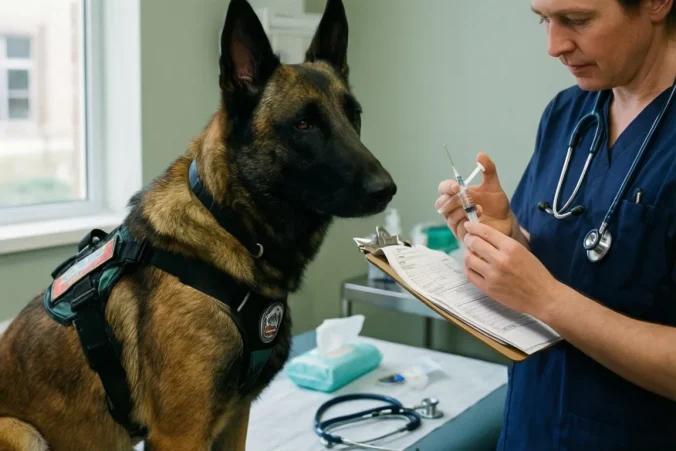
Working dogs pick up exposure from livestock, travel, and other animals on the job. Set their vaccination schedules around real patterns of contact rather than a standard pet timeline.

Core Vaccines That Matter Most

Most working dogs need protection against distemper, parvovirus, and rabies. Add leptospirosis when the dog spends time in standing water or around wildlife.

  • A border collie on a sheep ranch gets the core set at eight weeks, twelve weeks, and sixteen weeks.
  • A search dog that enters flooded areas adds lepto at twelve and sixteen weeks.

Building the First Year Schedule

  1. Start the series at eight weeks while the puppy still lives with its litter.
  2. Give the second round at twelve weeks once the dog begins short field sessions.
  3. Finish the initial set at sixteen weeks before full work starts.
  4. Boost rabies at sixteen weeks or per local law, then again one year later.
Age Vaccine Notes for working dogs
8 weeks Distemper-parvo Begin before exposure to other dogs
12 weeks Distemper-parvo + lepto Add if water or rodents are common
16 weeks Distemper-parvo + rabies Finish before heavy field duty

Matching Boosters to Daily Work

Annual shots still make sense for dogs that meet new animals every week. Dogs on the same ranch with limited outside contact can often stretch core vaccines to three years after the first booster.

Check titers at the two-year mark if you want data before skipping a round. A herding dog that only works its home flock often shows solid levels and skips the extra distemper-parvo shot that year.

Watching for Reactions on the Job

Track any swelling or lethargy after a shot in a simple notebook. Note the date, vaccine, and how the dog performed the next day.

  • Mild soreness that clears in 24 hours usually needs no change.
  • Repeated vomiting or hives after two different vaccines signals a need to split future doses or test titers instead.

Laser Therapy and Regenerative Medicine in Equine Practice: Current Evidence

Laser Therapy and Regenerative Medicine in Equine Practice: Current Evidence

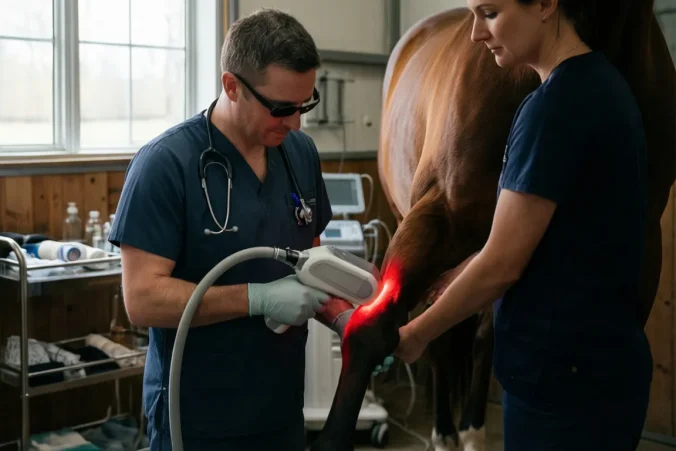
You see these tools showing up more often in lameness exams. The current evidence gives clearest support for laser on superficial tendon and ligament lesions when you pair it with controlled exercise. Regenerative options like PRP add value mainly in cases with core lesions or poor fiber alignment on ultrasound.

Where the Data Stands Right Now

Most published work focuses on Class 3b and 4 lasers at 5-15 J/cm². Studies report reduced swelling and faster return to light work in superficial digital flexor tendonitis, but controlled trials remain small. PRP shows moderate improvement in fiber pattern scores at 30-60 days when injected under ultrasound guidance. Stem cell data stays more mixed and case dependent.

  • Acute tendon strain in a 5-year-old eventer: two laser sessions per week for three weeks plus hand walking produced visible echogenicity gains by day 21.
  • Chronic suspensory branch desmitis: single ultrasound-guided PRP injection followed by laser every 10 days yielded better long-term fiber scores than laser alone in one practice cohort.

Practical Laser Settings That Match the Evidence

Start with the lesion size on ultrasound rather than a fixed protocol. Scan first, mark the area, then treat.

  1. 10-12 J/cm² over the lesion and 2 cm margins, continuous wave, 3-5 minutes per site.
  2. Repeat three times weekly for the first two weeks, then drop to twice weekly while you increase turnout.
  3. Re-scan at 21 days. If fiber alignment has improved at least one grade, shift to once-weekly maintenance.

Owners usually notice less heat and filling after the third or fourth treatment. Skip the laser on open wounds or active infection.

Pairing Laser With Regenerative Injections

Timing matters more than volume. Most practitioners inject first, then begin laser 48-72 hours later once the initial inflammatory spike settles.

Case Type Regenerative Choice Laser Start Follow-up Scan
Core lesion >15% cross-section PRP or BMAC Day 3 Day 30 and 60
Diffuse fiber pattern loss PRP only Day 2 Day 21
Recheck after failed rehab Consider stem cells Day 4 Day 45

You will usually see the biggest additive effect in horses that had already plateaued on exercise alone.

Simple Tracking You Can Run in the Field

Keep a one-page sheet per horse. Record:

  • Ultrasound grade at day 0, 21, and 45
  • Days to return to ridden work
  • Owner-reported heat or swelling score (0-3) at each visit
  • Any setbacks or extra rest days needed

After ten similar cases you will know whether your laser protocol is actually moving the needle on healing times. Adjust energy or frequency only when the numbers tell you to.