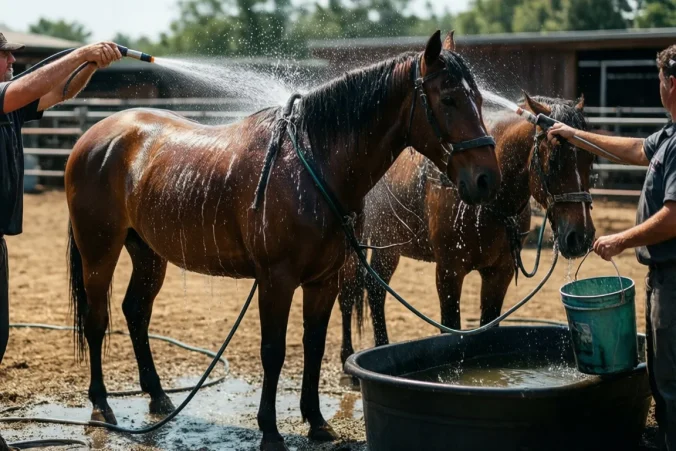
Managing Heat Stress in Working Horses: Cooling Strategies and Hydration
When temperatures climb above 80 degrees and your horse has been hauling gear or covering miles, heat stress can set in within thirty minutes. I start by offering water and checking breathing before the horse even stops moving.
Watch for the First Signs
You notice changes in gait and breathing before the horse shows obvious distress. Check these markers after every heavy session.
- Respiration stays over 60 breaths per minute five minutes after work ends
- Flared nostrils and skin that stays tented for more than two seconds
- Stumbling or reluctance to move forward on familiar ground
- Body temperature above 102.5 degrees taken under the tail
Keep Water Moving
Horses lose 5 to 10 gallons on a warm two-hour ride. Place buckets at every rest point rather than relying on one big drink at the barn.
- Offer plain water first, then add electrolytes only if the horse has sweated heavily for more than an hour
- Use a 5-gallon bucket with a handful of loose salt stirred in when daytime highs exceed 85 degrees
- Check intake by measuring what remains after thirty minutes; a drop below three gallons signals trouble
Cool in Stages
Start with the legs and work upward. Never hose the whole horse at once when the air is humid.
- Walk the horse in shade for two to three minutes
- Run cool water over the legs and lower belly only
- Scrape off water immediately so it does not trap heat
- Repeat the cycle two more times, then check temperature again
- Move into a breezy barn or under fans once the reading drops below 101.5
Match Electrolytes to the Day
| Work Level | Example Situation | Electrolyte Plan |
|---|---|---|
| Light | 45-minute trail ride at 75 degrees | Plain water only |
| Moderate | Two-hour lesson with jumping at 82 degrees | One dose in water after cool-down |
| Heavy | Three hours of field work above 88 degrees | Two doses spaced two hours apart |
Build Recovery Into the Schedule
After a hot morning session I give the horse at least four hours before any further work. Keep a simple log on your phone: time finished, water taken, temperature at thirty minutes. Patterns show up fast and let you adjust the next day’s plan before problems repeat.