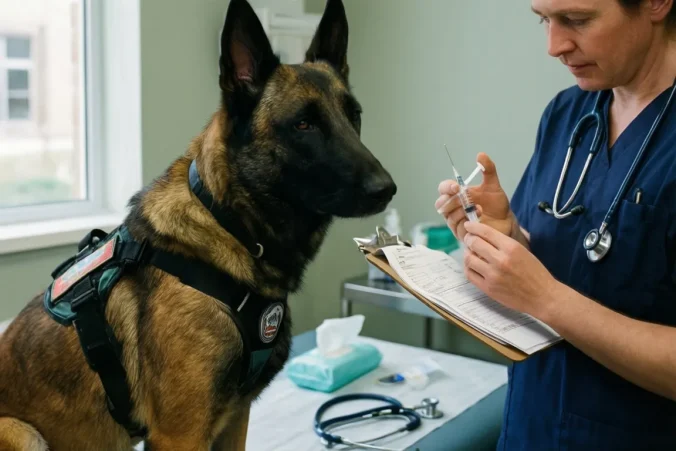
Vaccination Schedules for Working Dogs: Balancing Protection and Risk
Working dogs pick up exposure from livestock, travel, and other animals on the job. Set their vaccination schedules around real patterns of contact rather than a standard pet timeline.
Core Vaccines That Matter Most
Most working dogs need protection against distemper, parvovirus, and rabies. Add leptospirosis when the dog spends time in standing water or around wildlife.
- A border collie on a sheep ranch gets the core set at eight weeks, twelve weeks, and sixteen weeks.
- A search dog that enters flooded areas adds lepto at twelve and sixteen weeks.
Building the First Year Schedule
- Start the series at eight weeks while the puppy still lives with its litter.
- Give the second round at twelve weeks once the dog begins short field sessions.
- Finish the initial set at sixteen weeks before full work starts.
- Boost rabies at sixteen weeks or per local law, then again one year later.
| Age | Vaccine | Notes for working dogs |
|---|---|---|
| 8 weeks | Distemper-parvo | Begin before exposure to other dogs |
| 12 weeks | Distemper-parvo + lepto | Add if water or rodents are common |
| 16 weeks | Distemper-parvo + rabies | Finish before heavy field duty |
Matching Boosters to Daily Work
Annual shots still make sense for dogs that meet new animals every week. Dogs on the same ranch with limited outside contact can often stretch core vaccines to three years after the first booster.
Check titers at the two-year mark if you want data before skipping a round. A herding dog that only works its home flock often shows solid levels and skips the extra distemper-parvo shot that year.
Watching for Reactions on the Job
Track any swelling or lethargy after a shot in a simple notebook. Note the date, vaccine, and how the dog performed the next day.
- Mild soreness that clears in 24 hours usually needs no change.
- Repeated vomiting or hives after two different vaccines signals a need to split future doses or test titers instead.
Leave a Reply